What is a VIN and where can you find it?
A VIN (Vehicle Identification Number) is a unique vehicle identification code. Think of it as a vehicle’s ID number: it identifies a specific car and helps you search for its history using available records.
Where can you find a car’s VIN?
The exact location depends on the make and model. Common VIN locations include:
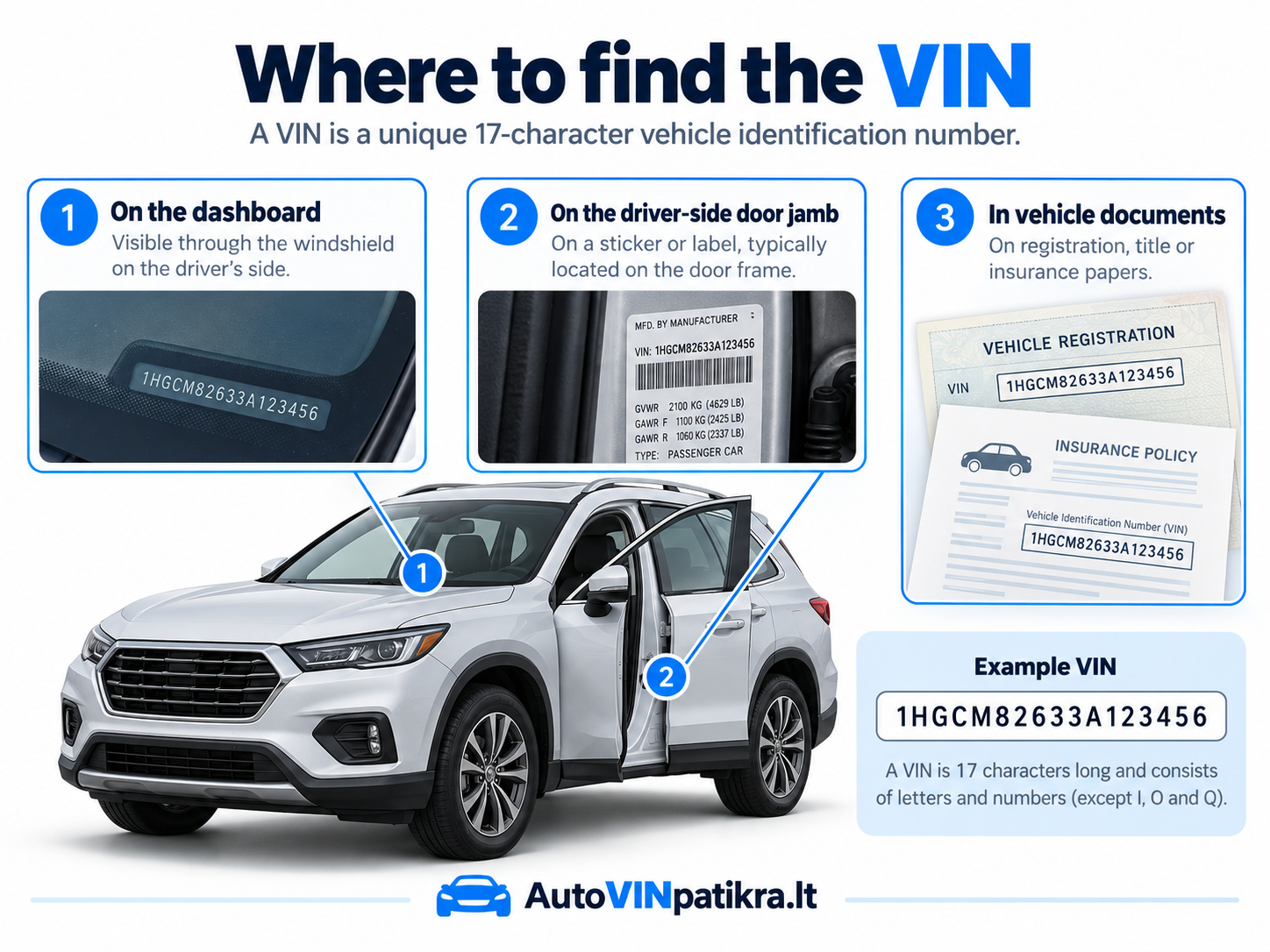
At the base of the windshield
Look through the windshield on the driver’s side, near the bottom of the dashboard. The VIN plate is often visible from outside.
On the driver-side door jamb
Open the driver’s door. Look for a manufacturer label or plate on the door frame or pillar.
In vehicle documents
The VIN is shown on registration documents and may also appear on insurance and other vehicle paperwork.
Stamped into the vehicle body
On some vehicles the VIN is also stamped in the engine bay, floor or another manufacturer-designated location.
What does a VIN look like and what do its characters mean?
A standard VIN contains 17 letters and digits. The letters I, O and Q are not used to avoid confusion with numbers. Example VIN:
1HGCM82633A123456Characters 1–3 (WMI)
Identify the manufacturer and geographic origin.
Characters 4–9 (VDS)
Describe the vehicle; depending on the manufacturer this can encode the model, body style, engine and other features.
Characters 10–17 (VIS)
Identify the individual vehicle; typically include information such as model year, assembly plant and serial number.
The exact character meanings vary by manufacturer and market. Decoding a VIN alone does not reveal a vehicle’s full history.
What can a vehicle history check reveal?
A VIN can be used to look up records in vehicle history databases. Depending on available data, a report may include:
Accidents and damage
Recorded collisions, insurance damage claims and other reported damage.
Mileage records
Odometer readings recorded on different dates, which may help identify inconsistencies.
Ownership and registration history
Registration periods, locations and possible ownership changes.
Vehicle use
Whether a vehicle was registered for private, rental, company or other use.
Service records
Maintenance and repair entries where supplied by relevant sources.
Title brands
US or Canadian title status such as Salvage or Rebuilt, if recorded.
Why check a VIN before buying a used car?
A car that looks good today may have suffered major damage in the past, have inconsistent mileage readings or have a branded title. This is especially relevant when buying a vehicle imported from the United States or Canada. A history check should complement an independent physical inspection and verification of the VIN markings.
How to check a VIN on AutoVINpatikra.lt
- Enter the 17-character VIN on the homepage.
- The system checks whether a vehicle history report is available for that VIN.
- If a report is found, order it for €4.99 including VAT.
- After successful payment, the report is usually emailed within a few minutes.
Frequently asked questions
Do all vehicles have a 17-character VIN?
Most cars made since 1981 use a 17-character VIN. Older vehicles may have a different identification-number format.
Can a VIN check confirm the actual mileage?
It can compare recorded odometer readings, but cannot guarantee that every reading was entered correctly.
Does a VIN report show every accident?
No. Only available recorded events can be displayed, so a physical inspection is recommended too.
Can I check a VIN for free?
Free VIN decoders often provide basic manufacturer details, but not a comprehensive vehicle history.
Make a more informed buying decision
Check whether a vehicle history report is available for your chosen car. Price: €4.99 including VAT.